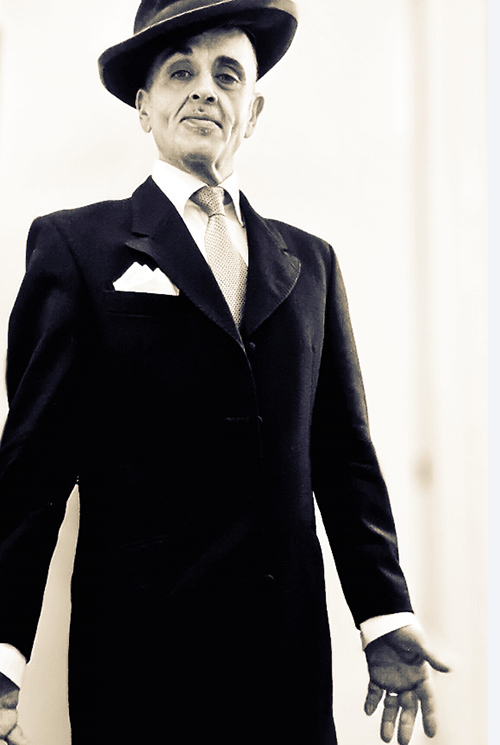
Award winning blues harmonica player and singer Little George Sueref was born and brought up in Cardiff of Greek parents. Hearing Percy Sledge’s When A Man Loves A Woman on the radio at his grandparents’ house, led him down a path to the down-home blues of the likes of Jimmy Reed, Billy Boy Arnold, Snooky Pryor, J.B. Hutto, Lightning Slim and Muddy Waters, as well as the more soulful sounds of O.V. Wright, James Carr, Johnnie Taylor and Sam Cooke. Having moved to London in 1987 in search of a living, he fortuitously picked up an old harmonica from the mantlepiece at a friend’s house and immediately loved the sound it made. He went to a music store and bought a new one and visited a record store in search of a blues album to play along with. The guy in shop the sold him a Fats Waller cassette because he didn’t really know what the blues was. It was a step in the right direction at least.
Working in London as a motorcycle courier, a fellow biker who was a blues guitarist spotted George’s harp sticking out of his top pocket one day and finding that he had just started playing it suggested that he took some lessons from a guy who actually lived opposite George. He also said that maybe he should come and see a band that he played with occasionally at the Station Tavern - Big Joe Louis and his Blues Kings.
He got a gig quickly with a local band but by the end of 1988 had become a member of Big Joe Louis’ band playing the harmonica with his soulful high voice complimenting Big Joe’s lower tone. His tenure with that outfit lasted around twelve years and created the opportunity for him to tour backing the last of the blues legends from the USA including Lazy Lester, Jimmy Thomas, Big Jack Johnson, John Primer, The Reverend Charlie Jackson, Honey Boy Edwards, R.L. Burnside, Big Bad Smitty, Buba Barnes, Chick Willis, The Eldorados, Big Boy Henry, Big Clara McDaniels and Homesick James.
By the end of 1999 he had been regularly performing with his own band under the name Little George Sueref as well as with Big Joe and his Blues Kings and decided that the time was right to record an album under his own name. He chose Toerag Studios to do it because of its analogue equipment and the masterly touch that owner/engineer Liam Watson had brought to the Big Joe Louis album amongst many other great records that had been produced there.
George says that he dreamed of having Lazy Lester play on his album. As luck would have it, Lester was going to be arriving in the UK for some dates on the first day of the recording sessions. George collected him from the airport to take him to the hotel and Lester, in search of some company, asked him what he was doing that day. George told him he was recording an album and Lester said he’d come along. He absolutely loved the date and said that the whole thing reminded him recording at Excello in the old days.
George and the band cut the album in two sessions. The only overdubs are some backing vocals George added his voice to on a couple of tracks. All but four of the fifteen tracks are his own compositions.
He made twenty-five copies of a compact disc in 2000 and took them around a few London record shops. The blues department in the basement of Ray’s Jazz bought two or three copies and played it while George was still in the store spending the money on a Jessie Mae Hemphill album. The stock sold while he was there and Ray’s bought all he had left.
Broadcasters John Peel, Charlie Gillett and Andy Kershaw were all regular customers at the store and each of them played tracks from the album regularly on their shows. Peel nominated it as his album of the month and called him up to do a show. Charlie Gillett was so knocked out by it he said it was his album of the year and offered to add these liner notes to the next edition when George made more copies of the album.
“The sound of the first few bars is familiar with the kind of blues shuffle that could have been recorded in the 1950’s in Chicago or Louisiana, but from the moment the singer comes in its like someone dropped a bottle on a concrete floor. You stop whatever you were doing and turn to look at the speaker, hoping that an explanation will come out of the cabinet. Didn’t somebody say that the singer was British? When did a British singer ever sound like this?
George Sueref wails higher than most blues singers, and more relaxed too. Back when the city blues was being hammered out, not many singers chose to float their voices over the rhythm. Among the exceptions were Junior Parker in Memphis and J.B. Lenoir in Chicago, two of my all-time favourites and Little George doesn’t suffer from being compared to either of them.
If his voice is a revelation, so is the quality of his song writing. One song after another feels like it’s been steeped in time. George wrote all but four of them and they all sound completely convincing. He’s even got the tracks sequenced perfectly, bouncing us along for a couple of tracks and the dropping us into a pool of desolation.
One other miracle, George has found an engineer that understands that to record this music you do not jam microphones up close against every instrument, with half a dozen covering the drum kit. Instead it feels like the musicians are hearing each other acoustically in the same space, with just a few microphones picking up everything happening in the room. Each song is recorded as a particular moment of time, with nobody worried if the tempo changes a bit or if somebody fluffs a note.
Each time I listen, a different song envelops me in its atmosphere, and as I write these notes, ‘Living in the city’ feels like an all-time classic. When was the last time you found an album that held up its quality from track one to track 15? Thanks to Mike Gavin in the basement of Ray’s Jazz Records on the corner of Monmouth St and Shaftesbury Ave for sending me a copy of this album in February 2001. It has since become one of the years hits for listening to London Live on Saturday night.”
(Original liner by Charlie Gillett notes from 2000 CD release.)

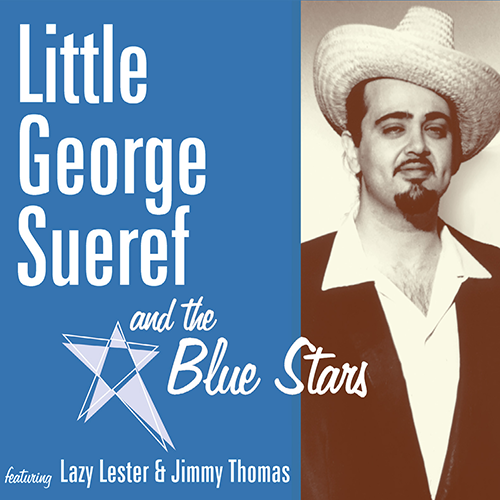
Little George Sueref & The Blue Stars ~ WOMAD 2002


